

Renewable Energy Credits, Hourly Matching, and Deliverable Markets: A Guide for Enterprise Sustainability Leaders
Executive Summary
For years, Renewable Energy Credits (RECs) offered corporations a straightforward path to claiming 100% renewable electricity: match annual consumption with annual RECs, regardless of when or where that power was generated.
That era is ending.
For chief sustainability officers, renewable energy procurement leaders, REIT executives, and data center operators, these changes fundamentally alter how clean energy must be sourced, accounted for, and integrated into enterprise energy strategy.
Proposed updates to Scope 2 accounting guidance introduce two fundamental shifts:
- Hourly matching between electricity use and renewable generation
- Deliverable market boundaries, requiring RECs to originate from generation that can physically reach your load
For data centers, REITs, healthcare systems, universities, and large enterprises, this represents a structural change, not simply a compliance adjustment. Procurement complexity will rise. REC availability will tighten. Sustainability strategies that once worked on paper may no longer deliver meaningful grid impact.
Organizations that adapt early will gain clarity, control, and resilience. Those that wait risk higher costs, constrained supply, and delayed decarbonization progress.
Why This Matters Now
Large-load growth, grid congestion, and accelerating corporate climate commitments are converging at the same moment regulators are raising the bar on carbon accounting. For many organizations, REC strategies were built for a simpler era, one without hourly accountability or geographic deliverability requirements.
The companies that act now can shape their renewable strategy deliberately, secure higher-quality supply, and avoid reactive procurement later. Those that delay may find themselves competing for limited resources under tighter timelines and higher prices.
This is especially true for organizations operating mission-critical facilities with 24/7 load profiles, including data centers, healthcare systems, universities, and large commercial real estate portfolios.
From Simple Offsets to Grid-Connected Strategy
Corporate decarbonization typically begins with energy efficiency because the greenest kilowatt-hour is the one you never use. From there, many organizations pursue onsite generation and physical PPAs, followed by virtual PPAs. Historically, RECs came last: flexible, simple, and detached from operational realities.
Under emerging guidance, the simplicity and flexibility associated with RECs disappears.
Once the new regulations take effect, RECs must be:
- Matched hour-by-hour to actual electricity usage
- Sourced from deliverable regions based on EPA eGRID subregions (see below)
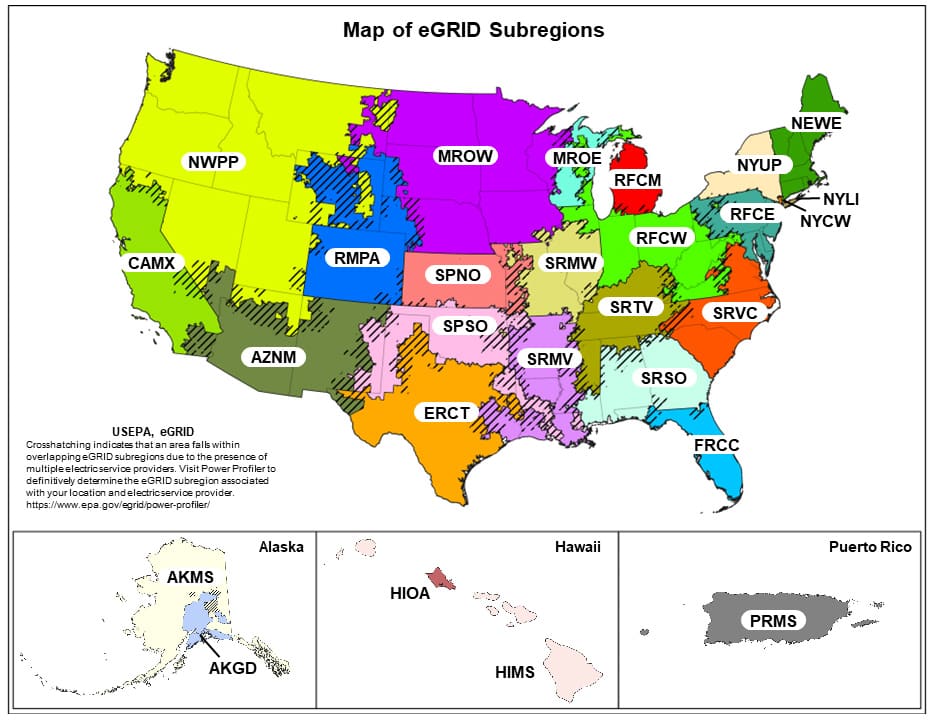
What Hourly Matching Means for Data Centers in PJM and the Mid-Atlantic
Practically speaking, a data center consuming power at 3:00 a.m. in Northern Virginia will need renewable generation produced during that same hour and within a grid region capable of physically serving that load.
This signals a broader shift toward impact-based accounting, aligning sustainability claims with real-world grid outcomes rather than certificates alone.
Why This Is a Seismic Shift for Large Energy Consumers
These changes reshape how organizations must approach renewable procurement:
- REC sourcing becomes location- and time-sensitive
- Supply tightens in high-growth load corridors
- Prices increasingly reflect congestion, capacity constraints, and hourly availability
- Sustainability, procurement, and operations must work in concert
RECs are no longer a back-office transaction. They are becoming a strategic energy decision.
For enterprises with continuous load, especially data centers, healthcare systems, and university medical campuses, this evolution creates both responsibility and opportunity.
Key Takeaways for Sustainability, Renewable Energy Procurement, and Operations Leaders
- Annual REC matching is giving way to hourly accountability
- Geography matters, as low-cost, out-of-region RECs may no longer qualify
- Procurement complexity is rising
- Market expertise becomes a competitive advantage
Implications for Data Centers and Other Large Enterprises
If your organization operates in PJM, NYISO, ISO-NE, or ERCOT, the new REC landscape calls for a more integrated approach:
- Sustainability goals aligned with wholesale market realities
- REC strategy coordinated with capacity, congestion, and load growth planning
- Renewable procurement evaluated alongside energy supply and demand response, particularly for organizations planning load growth, new data center development, or green-certified commercial properties.
With more than 20 years of active participation inside ISO markets, ECM helps large energy users translate sustainability ambition into executable market strategy.
For ISO-direct customers, RECs are just one lever among many. By coordinating renewable sourcing with supply strategy and market participation, ECM consistently uncovers opportunities for compliance, resilience, and cost optimization.
Recently, one client dependent on RECs to meet corporate sustainability targets achieved:
- 12% below-market REC pricing
- More than $200,000 in savings
- Full compliance with voluntary and regulatory requirements
That outcome reflects disciplined market access, timing, and regional insight.
The Bottom Line
RECs are evolving from a simple accounting mechanism into a sophisticated energy strategy component.
Organizations that respond thoughtfully, integrating sustainability with ISO-level procurement, gain cost control, credibility, and long-term decarbonization momentum.
Those that delay will face higher prices, constrained supply, and increasing operational friction.
Ready to Get Ahead of the New REC Reality?
If your organization is navigating renewable strategy in PJM, NYISO, ISO-NE, or ERCOT, now is the time to reassess your approach.
Speak with ECM’s senior energy and sustainability strategists about:
- Hourly matching readiness
- Deliverable REC sourcing
- Integrated ISO-direct renewable strategies
- Cost optimization under evolving standards
About the Author
Sean Rustowicz is an energy and sustainability analyst at ECM Energy Management Services, supporting data centers, healthcare systems, universities, REITs, and enterprise operators as they navigate evolving carbon accounting standards and build market-aligned renewable procurement strategies.
About ECM Energy Management Services
ECM Energy Management Services is an ISO-direct energy procurement and advisory firm with more than 20 years of experience helping large enterprises secure power, reduce risk, and integrate renewables across PJM, NYISO, ISO-NE, and ERCOT. ECM works inside organized wholesale power markets to deliver customized strategies aligned with real grid dynamics — maintaining a 100% client success rate.